Monday, April 27

Meatless Monday Through Friday? 'Food Supply Chain Is Breaking' Tyson Warns in Alarming Newspaper Ads That Happen to Appear Alongside Stories About Tyson

"Eat More Chicken" pleads the forlorn, sandwich board-wielding heifer in those familiar Chick-fil-A ads. Soon eating more of any kind of meat could be a problem if Tyson Foods' warning is correct. "The food supply chain is breaking," the meat producing giant cautioned in alarming, full-page ads in the Sunday editions of The Washington Post, The New York Times and the company's hometown paper, the Arkansas Democrat-Gazette, as the Post reports.

Tyson, which has been forced to shut down 13 plants amid the pandemic, argued in the ads that its facilities must stay open to protect the free flow of food (meaning, meat) to American households, even as it defends itself against not properly protecting its workforce from the coronavirus. The ad called on the government to help find ways "to allow our team members to work in safety without fear, panic or worry" — in an advertisement conspicuous for its tone of fear, panic and worry.

D.C. labor lawyer Jon Steingart took to Twitter to note the weird juxtaposition of the ad's placement in the Post alongside the jump of a page one story on the safety of workers at meat processing plants, notably those employed by Tyson Foods.


Understanding that newspapers are desperate for revenue, allowing for the deliberate placement of an ad directly related to a news article on the facing page is, depending on one's point of view, either a violation of journalistic purity or perfect ad-edit symmetry and the logical way to position the paid response of a subject refuting the claims made about said subject in that very story (I'm sure it's just a coincidence that it's a terrific moneymaking scheme).

It used to be that this sort of thing just wasn't done, that ads related in any way to editorial content were strictly forbidden to run adjacent to that content. Of course, anyone who's been paying attention knows such quaint rules have long since been shredded — just check for the many blurred lines between ad copy and edit copy in fashion magazines or for the countless content and event "partnerships" between news orgs and the companies they cover, supposedly aggressively and without bias. The point is, don't be surprised if you start seeing more industries defending themselves by way of such adjacencies. Lord knows newspapers need the cash and industrial titans have got plenty to defend.

Friday, April 24

Ad of the Week: Bud Resurrects an Absolute Classic


We could all use a little "WHASSUP?!" right now. This week, Budweiser brought back its iconic TV campaign from the 90s, reframing it for the age of coronavirus, as Ad Age reports. The spot — which was shot using Zoom and was the brainchild of Bud agency VaynerMedia — features retired hoops stars Dwayne Wade and Chris Bosh, the WNBA's Candace Parker, DJ D-Nice and Wade's wife, actress Gabrielle Union, resurrecting the classic "WHASSUP?!" line, à la the original commercial from 1999 that became a fin de siècle pop culture phenomenon. As every advertiser knows, nostalgia has a way of making consumers feel all warm and fuzzy, and never more than during challenging moments. Spot-on in tone and timing, this little shot of sentimentality and silliness — albeit with an important message in these crazy times — is just what we needed.

Thursday, April 23

Publicis Groupe Creates Global CMO Position


The shutdown of the ad world caused by the coronavirus pandemic hasn't stopped one agency holding company from creating a top executive-level post.

Publicis Groupe today promoted Justin Billingsley, its president over Germany, Austria and Switzerland (DACH), to the newly created role of global chief marketing officer, where his responsibilities will include product development and marketing, client transformation, new and organic growth, and internal and external public relations and communications. The company said his immediate priority would be partnering with Publicis's global account leads and with clients directly "to ensure they are recovery ready, for today and tomorrow's 'next normal.' "

Billingsley will continue his role as chairman of Publicis Emil and Publicis One Touch, the bespoke agency networks for Mercedes-Benz and Nivea, respectively. Under Billingsley's leadership, DACH won both those accounts. Prior to joining Publicis a decade ago as CEO for Saatchi & Saatchi Greater China, Billingsley held senior marketing jobs at brands including Nokia and Coca-Cola.

Publicis this month reported a net revenue increase of 17 percent in Q1 but a 2.9 percent drop in organic revenue, as Ad Age reported. At the same time, the company announced that due to the pandemic's impact on its business, chairman and CEO Arthur Sadoun and Maurice Lévy, chairman of the supervisory board, would take a 30 percent pay cut while other top managers had their salaries reduced by 20 percent.

While stressing in an interview that there had been no layoffs at Publicis, Sadoun said that every country leader would "curate" cost-cutting plans, adding: "The world has been through many global crises, but nothing like the one we are facing today. I have no doubt we will overcome the crisis."

Publicis recently launched an AI platform in the U.S. called Marcel, which, it said, enables employees working remotely at the moment to post available jobs on assignments and projects throughout the organization to maximize efficiency and workflow.

Wednesday, April 22

Mojichat Makes Play for Streaming Game Ads

In a recent Mojichat branded activation, gamers earned $3,000 apiece —
more than 10 times the typical earnings per stream.

Mojichat believes it has cracked the code when it comes to placing non-intrusive ads in the most popular streaming games.

Celebrity gamers with huge audiences have steered clear of branded messages because they lose as much as 20 percent of their viewers when they stop gameplay to run a video ad, as the app's founder and CEO Jeremy Greene pointed out. "That has not only limited their monetization opportunities but also left advertisers without access to the lucrative streaming market."

Greene says Mojichat removes those barriers — with lucrative results for gamers.

Here's how it works. The company's new ad program targets the hundreds of millions of livestream gaming fans with brand images and links integrated into the custom avatars and in-game chats of streamers, according to the company, with all ads sold through its own agency, Lunchbox GG, which has facilitates agreements between streamers and brands. The agency says it has access to more than 20 million streamers seeking ways to monetize their gaming activities.

Mojichat’s custom emote and alert system allows streamers to create unique gaming personas from an array of face shape, hair, skin type, hairstyle, clothing and animation options, and employ the resulting avatars on any streaming video gaming platform, including Facebook, YouTube, Twitch and Mixer. With the new program, every bit donation, subscription or other alert received from a viewer during a livestream triggers the streamer's branded avatar and associated CPM payment. A link to the advertiser's selected content appears in the chatbox every time a branded alert is sent, making all alerts actionable. Every seven-hour stream can include an average of 98 brand impressions, based on the average number of alerts Mojichat users receive per stream.

In one of the first brand campaigns to use the program, marketplace app MercariGG inserted targeted ads publicizing a product launch into the live streams of three streamers. The campaign yielded 294 targeted and verified insertions with a CPM of $30. In addition, each of the three streamers earned $3,000 — more than 10 times their typical earnings per stream.

Launched in January, Mojichat now boasts tens of thousands of streamers, a 95 percent retention rate and 100,000 new unique views weekly. Participating streamers have an average unique viewership of 15,000 with a combined social reach of more than 72 million.

Attention Shoppers: The Time Is Now 9PM and the Store Is Now Closing — Forever


And you thought department stores and shopping malls were bad off before the coronavirus hit.

As one person put it so succinctly in this New York Times piece, they're pretty much toast now.

I happened to drive by one of the largest shopping centers in the Boston area, South Shore Mall, this past weekend and was struck by the sight of the massive, empty parking lot (except for the spaces in front of the still-operating Target). This is a mall with several mid-level (Macy's, Sears) and upscale (Nordstrom, Lord & Taylor) stores that were already bereft of foot traffic even in the best of times. As I gazed from the highway high above over at the sobering vista of a sea of thousands of available parking spaces, I wondered: What exactly is the owner of this hunk of suburban real estate wreckage going to do once all the stores inside shut for good? Like other mall operators, will they convert it into a mixed-use space featuring a smattering of retail plus, perhaps, a community college outpost, maybe some play areas for children? Or like others, will it be leveled to make way for an office park or, in the best of worlds, an expansive green space where the public can once again gather together once this crisis is past us (or at least more manageable)?

I feel for the people who make a living working in these malls. I myself was one of them back when I was in high school and college, and even after graduation since my first journalism job was so low-paying that in order to cover rent I had to supplement it with a job nights and weekends at a local department store (Dillard's, to be precise). On the other hand, I acknowledge that this is just one more inescapable albeit painful example of survival of the fittest, that this kind of thing happens all the time in nature as well as in the jungle of modern life. And in business, in a capitalist society, things, of course, take on a merciless brutality all their own.

The public has spoken and online shopping is what they want. Forever and ever. That's not going to change because a virus comes or goes. I myself have been inside a supermarket all of once in the last month; instead, I'm having deliveries made from my local Whole Foods a couple of times a week. It's been expensive, and challenging to place an online order with so many others having the same idea (it once took more than an hour), but it's been worth it. They make it worth it. E-tailers like Amazon and Etsy have been getting plenty of business from our household, too. (My washable, custom-made protective masks should arrive a small business owner in Los Angeles in the next day or two, thanks to Etsy having connected us.) This is the future and it's now.

Let's face it — we really didn't need all that material stuff anyway. And we certainly didn't have to go to a mall for it. The shopping mall has always been mainly a diversion from the boredom of daily life, a modern-day town square where you could go kill some time with friends no matter the weather — and eat a soft pretzel bigger than your head while doing it. Occasionally, you'd step into Foot Locker for a pair of sneaks or head over to Bloomingdale's for a towel sale. Maybe you'd hit the cineplex with your little nephew to see the latest Spiderman. But the mall was really always destined for the same nostalgic trash heap as the drive-in movie theater, network television and every amusement park with the exception of Disney — a relic from a time when we didn't have a pile of devices to distract us, when we couldn't have every product under the sun shipped to our front door in lightning speed, and when we were not, either by necessity or by choice, bound to home.

Of course, the end of physical shopping meccas has hardly meant the death of conspicuous consumption. To wit, there's this little item of an unspeakable nature of which I was heretofore totally unaware till a friend told me about it on the phone the other day — and now, well, I gotta have it. Just imagine, scrubbed clean and thoroughly vacated, all for a hundred bucks, and free shipping to boot.

There's a metaphor in there somewhere.

Monday, April 20

Live Is Still Alive: Live Nation and ASICS Look Beyond Lockdown; Plus, W+K Is Ad Age Agency of the Year

Bonnaroo attendees last summer participate in a morning event at the ASICS-branded
Third Eye Dome, a massive wellness activation produced by Live Nation
Live events have been put on hold for the time being, but the largest entertainment company in the world, Live Nation, has its eye on a post-lockdown future. In other words, live is still alive. The sneaker brand ASICS, which staged successful activations at three of Live Nation's most popular music festivals last summer, is moving forward as well, even as the retail sector tanks and as the athletic shoe market in particular copies with a 75 percent decline in sales because of the pandemic. Even though the Tokyo Summer Olympics were pushed back a year, ASICS still plans to roll out multiple Olympics-themed sneaker styles, as well as several other new designs, this year. For the case study on ASICS' work with Live Nation and more on what these resilient, forward-thinking companies are doing to survive the coronavirus crisis and their plans for thriving beyond it, check out my latest in Ad Age.

On the topic of companies that are killing it, congrats to all the shops that made this year's Ad Age A-List, particularly Agency of the Year Wieden + Kennedy. It is a bittersweet celebration since several of the award-winning agencies were forced to lay off employees because of coronavirus. Taking home Agency of the Year honors — a closely watched measure of success in the industry — is one thing, but winning it three years in a row is something else altogether, and it's a first this year not only for Wieden but in the history of the awards, which have been around since 1974. "This past year, the agency doubled down on its previous successes, proving that it can build upon even its best work with longtime creative partners while still drawing into its fold some of the most recognizable brands on the planet," said Ad Age, singling out the agency's work for Nike, Ford and Bud Light and business wins including Facebook, Fisher-Price, Quibi and, most notably, McDonald's. Keep killing it, guys.


The timing of Agency of the Year is also bittersweet because the awards happen to coincide with the departure of Ad Age's editorial el jefe Brian Braiker, a fine editor and standup dude whose absence will most definitely be felt not only in the newsroom but across the ad industry. As Brian wrote in his final editor's letter for Age: "I'm not going to bury the lede. This will be my last issue as editor of Ad Age. After three wonderful, challenging, intense and exhilarating years, I'm sad to say I'm parting ways with this iconic institution. Working with this newsroom in both good times and scary times has been an honor." The leading ad trade pub underwent a major redesign under Brian's leadership, while new products including podcasts, video series and events were launched. The brand won five prestigious Neal Awards for b-to-b journalism in the last three years, including Best Website, which it just picked up last Friday.

Being an editor in these times is extremely difficult — some might say impossible. Editors no longer merely conceive and produce the content against which advertising is sold, in addition to hiring, firing and otherwise managing human resources, traveling to industry conferences all over the world, hosting podcasts, webcasts and video series, making media appearances, and a gazillion other responsibilities. Rather, they are expected to do all that and also have a key role in the business side — up to and including making sales calls and drumming up new business. Dare I say that for the typical editor in chief, generating content and worrying about business-side functions like sales and business development are about a 50/50 split in terms of time and energy spent.

It didn't used to be that way back when salespeople had their own relationships and ideas for building the business — something they have come to (heavily) lean on the editors for. In one of my former lives as an editor, I was actually told by a business-side executive during a conversation about the impossibility of juggling content creation and sales responsibilities that our product wasn't the kind of thing that, you know, could bring down a president or anything, the implication being that it shouldn't be so hard to crank it out while also selling it. "We're not Woodward and Bernstein," this character had the nerve to say to a journalist's face. And people wonder why the business is dying. Maybe it's because when the editor should've been at his desk in New York producing solid content, he was instead on the West Coast making sales calls. And maybe, just maybe it's because some of the people running the business shouldn't be. 

As for you, Brian, you are an A-lister yourself. Everybody in this business and I look forward to your next act.

Friday, April 17

'Aunt Jemima Is Next': Land O'Lakes Butter Quietly Retires Native American Imagery — And Right-Wing Hysteria, Naturally, Ensues

The old Land O'Lakes label, featuring the Native American character Mia

The label of Land O'Lakes dairy products featuring the familiar Native American "maiden" is one of the most iconic product images ever. It also represents the worst of cultural appropriation, perpetuates the myth of friendly relations between Native Americans and early European settlers, and even trivializes genocide, critics have charged.

And so, the character — whose name is Mia — has officially gone the way of the Frito Bandito, Sambo's and every other racist brand mascot down through the history of American capitalism.

As Modern Farmer noted, Land O'Lakes retired the old label (which had been around since 1928) very quietly — but that didn't stop the ferocious roar of complaints that followed, angrily denouncing the redesign as political correctness gone too far.

A few choice comments on Modern Farmer's story (many of which I have edited only to make them passably literate):

"This has gone too far. The subversiveness of a small group is dominating our society. Land O'Lakes should not fold so easily."

"PC BS is destroying the country. Seems everyone is offended by something, and if one out of 10 million feels slighted then things are changed. Sad sad sad."

"America is no more. Aunt Jemima is next."

Several readers were so pissed that they threatened to quit buying Land O'Lakes.

This is hardly the first time a company has been blasted for embracing Native stereotypes — the offenders include everything from pro sports (Atlanta Braves, Washington Redskins) to potato chips (Yum Yum brand) to alcoholic beverages (Crazy Horse malt liquor), as Business Insider reports.

There was also that Victoria's Secret fuck-up a few years back, when a model donned a massive Native headdress for the retailer's annual fashion show — something Good Morning America invited me on to yack about. What I told GMA was that the brand obviously did the right thing in apologizing and agreeing to edit the offending outfit from the program before it aired on national television. My question was, who ever thought having Karlie Kloss strut down a runway in her underwear and a headdress was a good idea in the first place?

As with Reese Witherspoon's fashion line Draper James sponsoring a coronavirus-inspired dress giveaway aimed at honoring schoolteachers who in reality had almost no shot at actually winning a free dress, but a 100 percent chance of ending up on the label's email list, oftentimes brand marketers' hearts are in the right place, but their brains are slow to follow.

Brands have enough trouble lately than to go around embracing cultural stereotypes and purposely offending all good thinking people. And if the Charles Darwin crowd doesn't wish to join the rest of us in the 21st century, well, don't they have an anti-social distancing protest or some homophobic tents in Central Park to get to?

Thursday, April 16

Reese Witherspoon's Coronavirus Dress Debacle Manages to Piss Off Every Schoolteacher in America

Cruel intentions?

Sometimes even when our hearts are in the right place, our brains are slow to follow.

Take Reese Witherspoon's Draper James fashion label and its brainless, coronavirus-inspired giveaway of dresses to schoolteachers.

Noble idea, it would seem, but one that has ended up as one of the worst marketing flops in the age of the pandemic, helping reinforce the perception that certain companies and public figures are milking the crisis for their own benefit, which has ushered in hashtags like #covidwashing and #celebritycovidwashing.

In short, Reese Witherspoon can't do math. If you want the gory details, check out Vanessa Friedman's juicy blow-by-blow in the Times. Those quoted in the story and readers who commented on it seem to acknowledge that the company apparently didn't mean any harm when it put on a raffle that turned out to be more popular than anybody expected and that ended up disappointing everybody who didn't win — which was pretty much everybody who entered the contest.

But when it comes to brand marketing in the age of social media (and now, pandemics, where the public's kindness and patience are pretty much shot and such concepts as understanding and forgiveness have gone the way of haircuts and trips to the shopping mall), there's no such thing as an A for effort. You either pass or you fail.

And there's little doubt that this debacle will be a text-book case for many years to come, held up not just as a colossal brand failure but yet one more example of a hopelessly out-of-touch celebrity.

The best brand efforts during the pandemic have been those that are actually selfless — like TripAdvisor's campaign to help those most impacted by the paused travel industry, or donations to healthcare workers of food, protective masks and other items by companies like McDonald's, Dominos and KFC. Others have made large donations to those on the frontlines. (Ad Age is keeping a running tally of how marketers are responding to the coronavirus.)

At the end of the day, if Witherspoon and her label had seriously wanted to help the cause while also coming off as charitable, they'd have been better off just writing a big check to the Red Cross or a hospital in New York City. Or, here's an idea: You're a fashion brand. Fabric is your lifeblood. Why not manufacture and donate masks instead of giving away, you know, "ugly dresses I wouldn't be caught dead in," as one Times reader wrote. (Another reader cynically suggested that perhaps the dresses the company picked to give away were styles that didn't sell all that well in stores and that were, therefore, in ample supply in the warehouse.)

But Reese and her company didn't write a check or make masks. Instead, their ill-conceived, bungled stunt served only to damage the reputation of the Southern-flavored fashion label as well as that of the actress herself (whose public image was already tainted thanks to some of her past shenanigans, most notably: "Don't you know who I AM??"). Not to mention sullying the names of both sets of Witherspoon's grandparents, for whom Draper James is named.

Oh yeah, I brought the family into it. (Or, rather, she did.) Bring it, Reese.

Here's the thing: Of all the groups I wouldn't want pissed off at me, schoolteachers would have to be right at the top. They are vocal, they are organized, and they can be (lest you forget all those times you got detention) very punishing.

Now, Reese, for your punishment, I would like for you to write 100 times: "I will not be another spoiled, tone-deaf, opportunistic celebrity."

Wednesday, April 15

Supermarkets, Drugstores and Delis Can't Save Economy: Retail Sales Worst in History


Turns out all those Amazon deliveries and all that toilet paper hoarding wasn't enough to save the economy.

The U.S. government's own data, just out this morning, reveals that retail sales are the worst they've been since it started tracking them, the Times reports. Retail declined 8.7 percent in the month of March compared to February — with the situation likely having worsened since then, as most states didn't move to shut down nonessential businesses till mid-March into April.

And you can blame this for the whole mess:


The sector may well bounce back after the worst of the pandemic is over and retailers begin to slowly reopen. What likely will never recover are the millions of lost jobs in an industry that was already in the toilet before anybody heard of coronavirus.

report earlier this month predicted that 15,000 store locations may never open, with chains like Macy's, Gap and Kohl's poised for collapse altogether. Macy's last week hired investment advisers Lazard to come up with a plan to save the department stores, with all locations currently under lock and key and some 123,000 employees furloughed. Even pre-pandemic, Macy's had started carrying out a plan to close 125 stores and eliminate more than 2,000 jobs, on top of all the locations and employees it had already killed off.

As for the marketing of all those products consumers can't get to stores for right now but that they can order online, you might want to think again if you're a retailer looking to use our stuck-at-home status to push, say, the pajamas Chrissy Teigen is wearing in her latest Instagram post, warns WWD.

Your intent may be nothing more than good old-fashioned capitalism, dear marketers, but it turns out that some people may see hawking pamper-yourself products like lavender-scented body scrub and $200 diamond-infused bottled water as downright tacky with the stench of death in the air. Like you, no doubt, I have been served ads in the last few weeks for everything from home gym equipment to bunker-ready generators to (my favorite) virtual cosmetic surgery consultations. Not to mention manhood-enhancing padded undershorts. Though that didn't have anything to do with apocalypse preparedness. At least I don't think so. Still, I resent their implication.

As brand expert Ellen Niven pointed out in WWD, not only does coronavirus-inspired advertising strike a terrible tone, "it reeks of opportunism."

Ad Age is keeping a running tally of how marketers are responding to the pandemic. While many are making a point of being charitable right now — like KFC and Chipotle donating food to healthcare workers, TripAdvisor helping the decimated travel industry or McDonald's donating 1 million protective masks — others are clearly attempting to, well, just sell shit, like the Wisconsin brewer that launched a brand of beer called "FVCK COVID" or Chase bank's ads promoting the fact that it's still up and running during the pandemic and available for doing what it does best: stealing people's money.

But there is a lesson in the launch of a new beer or a bank selling its services: We must, even in the face of disaster, keep living. And surely there's no harm in making life at home as comfortable, even luxurious, as can be in these hunkered-down times.

I spent considerable time on the phone the other day convincing a friend it was OK if she gave herself spa treatments right now, even though she is haunted by the thought of coronavirus patients on ventilators in the hospital right down the street from her apartment. Here's the hard truth: While empathy is noble, the fact is, you are not going to make one less person suffer because you give yourself a rare earth clay masque.

I'm reminded of what that William Hurt character in the 80s film "Broadcast News" said to a coworker who didn't think he was properly upset that their colleagues were being fired even as their own jobs were being spared: "I'm sorry that I don't feel bad because I don't feel worse. This has happened at every place I've ever worked."

There's no denying this pandemic is awful — it is also totally precedented, just the latest deadly debacle in Mother Nature's curious little fucked-up experiment known as humankind.

So what's all that got to do with retail?

Ordering up a $2,800 Rock belt from Hermés may not save the world. But who knows? It might just save a job.

Bottom line: Don't feel bad because you don't feel worse. And don't feel guilty about going ahead and living your life even during these dark times.

And that includes buying stuff.

Tuesday, April 14

A Tale of Two Publishers: Condé Nast Braces For Pay Cuts, Layoffs as Hearst Hunkers Down


If you're one of the dozen or so people still employed in the magazine business in these end times, I sure hope you're not working at Condé Nast.

As first reported by the Post's Keith Kelly, the publisher of Vogue, Vanity Fair and GQ said that due to the coronavirus pandemic, a temporary pay cut would go into effect from May through September, affecting 10-20 percent of employees who make at least $100,000 a year. CEO Roger Lynch said he would slash his own salary by 50 percent. The company also told employees to brace for possible layoffs.

That's in stark contrast to Hearst, whose CEO Steve Swartz vowed last week that there would be no layoffs at the company that publishes Cosmo, Esquire and Men's Health.

I'm told that the pandemic pretty much annihilated any morale that was left at Condé, which has been in freefall ever since the dual mortal wounds of Si Newhouse no longer running the show and the collapse of the ad market for print. Not only have its magazines become thinner and thinner (those that haven't been shut down altogether) but celebrity editors have been replaced by nobodies, the once-bustling hallways of its WTC headquarters have become more and more morguelike, and much of the magic that not all that long ago made Condé the envy of the publishing world has vanished. 

As if all that weren't enough of a fantasy killer, Anna Wintour posted a pic of herself on Instagram sporting athleisure while she bosses it up remotely. 

Sweatpants. At home. Groundbreaking.

Thursday, April 9

The New Trump Press Secretary Looks Like She's in the Running to Be His Fourth Wife

Here, Kayleigh McEnany (left) and ousted anchor/conspiracy peddler Trish Regan can be seen putting their biology degrees from MIT and experience as chief epidemiologists at the CDC to work, dismissing the severity of the coronavirus just before it wrecked America. "It will never come here," proclaimed McEnany, who, shortly thereafter, was rewarded with the job of White House press secretary.

Wednesday, April 8

Only Half the Public Thinks the Media Are Doing a Good Job Covering the Coronavirus


It's a majority — but a slim one.

According to a poll just out from the Pew Research Center, 54% of Americans approve of the job the media are doing covering the coronavirus pandemic. That stat was the basis of the headline in The Hill.

But to me, here's the real news, and it's not good: the remaining 46% of survey respondents think we're doing a poor or only fair job.

This is no small survey, taking into account the opinions of 11,000 adults in March, as mass business closures, self-quarantining and social distancing were in full swing and as cable news ratings surged.

With so many of us consuming news content right now, what does it mean, then, that nearly half the public think we suck at our jobs?

It's a given that some of the content, especially on the part of the cable nets and the tabloids, has been alarmist and sensationalistic. (Want to raise your blood pressure? Just try perusing these headlines.) And we can certainly argue about the wisdom of consuming coronavirus coverage nonstop (a terrible idea, in my opinion, and for you fellow, less stable souls, enough to make a person want to take a swan dive off the top of a building). But by and large, I believe the content has been thorough, measured and reliable (with one obvious exception). And many pubs, including The New York Times, have made their coverage of the crisis free, even as evil bastard Rupert Murdoch's Wall Street Journal and others have kept theirs behind a paywall. Some publishers that initially offered their coverage gratis, like The Miami Herald, are now charging, saying they can no longer afford it.

There are fewer and fewer reporters to actually crank out that content, incidentally. Sadly, Poynter is keeping a running tally of the news orgs that have laid off or furloughed journalists because of the coronavirus. It is not a short list, and encompasses all media, not just newspapers, many of which were already struggling to survive even before the pandemic hit.

How can democracy survive in a country that doesn't value a free press and in an economic environment ambivalent about its demise?

Sucks being the messenger sometimes.

Tuesday, April 7

TV Ratings Are Through the Roof During the Coronavirus Lockdown — No Thanks to GenZ


Not surprisingly, viewership of video content of all kinds — streaming and linear TV, daytime and primetime, news and entertainment — is enjoying a surge unlike it's seen in years with everyone being shut-ins and all. Just as predictably, young consumers are opting to pass the time with online video programming instead of traditional TV.

And when they're not on social media or watching YouTube they are, of course, playing video games.

According to a survey of more than 1,700 teenagers from Brainly, social distancing and self quarantining have Generation Z flocking to digital content channels, with 60% of respondents consuming more video content now than before the pandemic, most of it on YouTube (40%), followed by Netflix and Hulu (24%).

When it comes to social media use during the coronavirus crisis, GenZ continues to turn mostly to Instagram (59%) to stay entertained and informed and to keep up with friends, followed by Snapchat (50%). Facebook lags far behind, commanding the attention of just 13% of teens.

Meanwhile, video games — which even before the pandemic were poised to become a $90 billion global market this year, with an estimated 2.5 billion gamers worldwide  — are also experiencing a bump in popularity during the lockdown, with 64% of teens gaming and 42% doing so for more than 2 hours per day. Meantime, 40% of those surveyed said they're spending all this time at home playing video games with their friends — remotely, naturally.

No wonder half of students are ditching their online classroom obligations, as the Times reports.

Monday, April 6

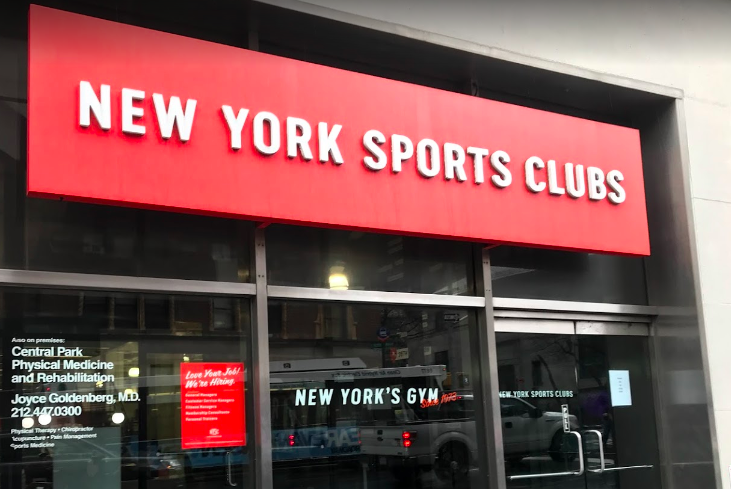
Town Sports, Which Continues to Charge Membership Fees While Clubs Are Closed, Gets Threatened by Multiple State AGs

Brands doing good? More like brands that treat people like crap

In this space, I've been documenting the many cases of brands doing good during the pandemic — from Google donating ad space to small businesses to KFC and Chipotle passing out free food to healthcare workers. There seems to be no shortage of companies that have put lending a hand during the crisis ahead of financial gain.

And then there's Town Sports International.

Unlike fitness chains such as Equinox and Planet Fitness, Town Sports has continued to charge members of its gyms — including New York Sports Club and Boston Sports Club — monthly dues despite being shut because of coronavirus. The situation has understandably caused an uproar among members, who say their complaints to the club have fallen on deaf ears.

And now the attorneys general of three states and D.C. are getting involved.

New York Attorney General Letitia James said she considers the club's actions criminal and threatened its owners in a letter also signed by the AGs of Pennsylvania and D.C., where the company also operates. Meanwhile, Massachusetts AG Maura Healey said her office had received dozens of complaints and tweeted that Town Sports' actions were "completely unacceptable." She noted that perhaps members have had trouble getting responses from the clubs since they "fired all their employees." Ouch.

Town Sports — what you might call the Jack in the Box of health clubs — is notorious for its subpar facilities and service, and in particular for screwing over its members. Legion are the complaints online about how difficult the company makes it for members to close their accounts, even when there isn't a pandemic going on.

It's a situation that has been going on literally for decades, ever since the nearly half-a-century-old New York Sports, the first of the chain's outposts, started rapidly expanding in the 80s and 90s. How do I know? Because I was a member myself for many years and can attest to the company's general shittiness.

As anyone who's visited one of its locations can attest, Town Sports clearly doesn't put its profits back into its facilities. In a highly competitive industry where clubs like Equinox offer members bottled water and spa treatments, this club boasts locations that look like something out of the movie Saw, with broken exercise equipment, out-of-order showers and saunas, worn and molded shower curtains, and badly trained employees.

It's one thing for a company to put greed before its customers, inviting bad PR and the wrath of attorneys general in the process — quite another to fuck people over in the middle of a global catastrophe in which folks are literally dying. Especially if you're a company ostensibly in the health and wellness business.

Brands doing good? More like brands that make us sick.

Most Advertisers Are Making Adjustments to Creative Content Because of the Pandemic

Purdue Chicken chairman and pitchman Jim Perdue in an ad thanking those on the
front lines of the food industry, including farmers, factory workers and truck drivers

The large majority of advertisers have adjusted their creative since mid-March, when COVID-19 was declared a pandemic by the World Health Organization, according to a new survey by the Association of National Advertisers.

Of those surveyed, 90 percent of brands had made some kind of change in their advertising content, ranging from directly addressing the pandemic and its effect on communities to stressing more emotional versus straight sales messaging to backing off lifestyle imagery like large social gatherings.

Nearly half (46%) said their changes were substantial. Most advertisers surveyed (55%) noted that in-house teams had directed their adjustments. A sizable number (39%) suggested making changes to content was challenging, giving reasons that included closed-down studios and limited access to talent and crews because of the mass self-quarantining.

Earlier, Ad Age reported a survey from Advertiser Perceptions indicating that one-third of advertisers had canceled at least one campaign due to the pandemic. Eighty-one percent of those surveyed said they expected to cut ad budgets significantly this year, with 68% projecting less spending next year. While more than one-third reported cutting broadcast and cable TV budgets, nearly half said they were increasing their spending on Facebook and more than one-third upped the business they do with Google.

Ad Age is keeping a running list of how brands are responding to the pandemic. Numerous charitable efforts have been launched, ranging from Google donating free ad space to small and medium-sized businesses to eBay's accelerator program aimed at helping brick-and-mortar shops build their online sales operations to chains like KFC and Chipotle's donations of food to healthcare workers.

Among the brands that have addressed the health crisis in some way in their creative content are Perdue Chicken, which made an an featuring company chairman Jim Purdue thanking workers on the front lines; Little Caesars, which did a free-delivery tie-in with Conan O'Brien; and Taco Bell, which fashioned a campaign around user-generated drive-thru videos.

Such instances of brands doing good overshadows the bleak outlook for the ad business and those who rely on it. The recession — including the advertising recession (depression?) — is officially underway.

Thursday, April 2

Cannes Going Virtual? Festival Considers Options After Holding Companies Pull Out


With agency holding companies saying thanks but no thanks to the idea of moving the annual Cannes Lions International Festival of Creativity to October from its regularly scheduled June slot due to coronavirus, the show is currently looking at its options — one of which is doing the whole thing virtually — according to Ad Age.

WPP and Omnicom had already pulled out of the festival, while IPG, Publicis and Droga5 are said to be "assessing the situation." A trove of marketing and tech events, including SXSW in Austin, have been either canceled or rescheduled because of the pandemic. Google's Cloud Next and Microsoft's Build are a couple of meetings going virtual this year, while others — including Facebook's F8 developer conference — have been axed altogether.

But for agencies and their creatives vying for the industry's most coveted award, as well as the companies that do business with them and the press that cover it all, the absence of Cannes would be a weird situation indeed. We've all personally known creatives (that's creatives, as in plural) as well as agency CEOs whose entire identity would be in question without their precious Lions.

But the reality of a virtual Cannes and other conferences is starting not only to look more like a possibility but maybe even the norm — not just this year but moving forward. With all of us working from our kitchen tables during the self-quarantining and becoming more comfortable by the day with virtual meetings and technology like Zoom and Google Hangouts, might this crisis usher in a whole new routine of attending conventions in our jammies?

And then there's the not-insignificant issue of money. Long before the COVID-19 outbreak and subsequent pause of nonessential businesses, agencies and their parent companies were already balking at the multimillion-dollar annual investment that is Cannes, with Publicis going so far as to boycott in 2017, sending shockwaves through the agency world and serving as a gut punch to organizers of advertising's highest-profile event.

The upside of a virtual Cannes is obvious — not only would it save all those millions in travel costs but many more people would conceivably be able to attend, and without a passport. On the other hand, one of the major selling points of the festival has always been the opportunity for face-to-face interactions. As Michael Clinton, president, marketing and publishing director of Hearst Magazines, shared with me during an interview from the Croisette a few years back, Cannes is "the most efficient few days I spend throughout the year. I see agencies, I see clients, I see our joint venture partners, I see fellow media executives — and it's all sort of all concentrated within six blocks." Then there are the many impromptu moments, some of which prove lucrative. "Literally you'll run into someone on the street and end up creating the makings of a deal," Michael said.

Another important aspect of the event would also fall by the wayside: those splashy activations sponsored by tech giants and other companies that spend millions each year setting up princely outposts on the Mediterranean, renting yachts and throwing lavish, invitation-only soirées.

The festivity is perhaps the single biggest thing that would be lost in a virtual festival. After all, Google Beach sounds like a party — a virtual fireside chat with Mark Zuckerberg (or an in-person one, for that matter) does not.

UPDATE: Cannes is officially canceled this year. Read all about it here.

Wednesday, April 1

Who Said Corona Lost Its Crown? Beer Sales Soar Along With Cleaners, Soap — And Yes, Toilet Paper — While Beauty Products Fade


Turns out it's not so much "Corona is finished" as "Who finished all the Corona?"

You will recall that 5WPR survey from a couple of weeks ago, indicating that 38 percent of consumers said they would no longer buy the beer brand because of a negative association with the coronavirus pandemic? Well, Ad Age got its hands on the latest Nielsen data, revealing that Corona sales are actually up by 50%. "Apparently, Corona Beer is proving popular at Zoom happy hours," the website reports.

Spurred by the panic buying of the last few weeks, Nielsen also pointed to massive sales increases for Kimberly-Clark, home of Scott, Cottonelle, Viva and Kleenex paper products (up 160%); Reckitt Benckiser, whose brands include Lysol and Mucinex (148%); Clorox (125%); Procter & Gamble, makers of Charmin, Bounty and Pampers (109%); and Colgate-Palmolive, parent of Colgate and Tom's of Maine toothpaste, Softsoap and Murphy's Oil Soap (90%).

The CEO of Corona parent Constellation Brands had been saying all along that, despite what polls might suggest, business was actually brisk. Even in a time when media coverage has been particularly alarmist, the Corona Beer stories have been especially over the top. "'Corona Beer Virus'? The Global Epidemic [sic] Is Taking a Real-Life Toll on the Beverage" went Time's bleak headline. It also didn't help when a congressman, alleging that the pandemic was being blown out of proportion by the media, dubbed it "the beer virus."

But while beer and toilet paper are doing just fine, thank you, other categories aren't so lucky.

With everyone sheltering in place, working from home and just generally acting as hermits and big, fat slugs right now, perhaps it's no surprise that looking our best is not exactly a top priority (with the exception of those of you who won't quit posting videos of yourselves on your Instagram Stories). According to Nielsen, business at L'Oréal, parent of Maybelline, Lancome and Kiehl's, is off by 10%, while at Coty, the beauty and fragrance empire that is home to CoverGirl and brands like Calvin Klein, Gucci and Philosophy, sales have plummeted 17%.

And if you were wondering what that faintly familiar aroma was wafting through your house these days? That's right, France.

How Agencies Are Remaking the Retail Media Market

"As agencies have moved more aggressively into the domain of commerce media, one has to wonder about the role of Amazon — specifically,...