 |
| Here, Kayleigh McEnany (left) and ousted anchor/conspiracy peddler Trish Regan can be seen putting their biology degrees from MIT and experience as chief epidemiologists at the CDC to work, dismissing the severity of the coronavirus just before it wrecked America. "It will never come here," proclaimed McEnany, who, shortly thereafter, was rewarded with the job of White House press secretary. |
Thursday, April 9
The New Trump Press Secretary Looks Like She's in the Running to Be His Fourth Wife


Wednesday, April 8
Only Half the Public Thinks the Media Are Doing a Good Job Covering the Coronavirus

It's a majority — but a slim one.
According to a poll just out from the Pew Research Center, 54% of Americans approve of the job the media are doing covering the coronavirus pandemic. That stat was the basis of the headline in The Hill.
But to me, here's the real news, and it's not good: the remaining 46% of survey respondents think we're doing a poor or only fair job.
This is no small survey, taking into account the opinions of 11,000 adults in March, as mass business closures, self-quarantining and social distancing were in full swing and as cable news ratings surged.
With so many of us consuming news content right now, what does it mean, then, that nearly half the public think we suck at our jobs?
It's a given that some of the content, especially on the part of the cable nets and the tabloids, has been alarmist and sensationalistic. (Want to raise your blood pressure? Just try perusing these headlines.) And we can certainly argue about the wisdom of consuming coronavirus coverage nonstop (a terrible idea, in my opinion, and for you fellow, less stable souls, enough to make a person want to take a swan dive off the top of a building). But by and large, I believe the content has been thorough, measured and reliable (with one obvious exception). And many pubs, including The New York Times, have made their coverage of the crisis free, even as evil bastard Rupert Murdoch's Wall Street Journal and others have kept theirs behind a paywall. Some publishers that initially offered their coverage gratis, like The Miami Herald, are now charging, saying they can no longer afford it.
There are fewer and fewer reporters to actually crank out that content, incidentally. Sadly, Poynter is keeping a running tally of the news orgs that have laid off or furloughed journalists because of the coronavirus. It is not a short list, and encompasses all media, not just newspapers, many of which were already struggling to survive even before the pandemic hit.
How can democracy survive in a country that doesn't value a free press and in an economic environment ambivalent about its demise?
Sucks being the messenger sometimes.
Tuesday, April 7
TV Ratings Are Through the Roof During the Coronavirus Lockdown — No Thanks to GenZ

Not surprisingly, viewership of video content of all kinds — streaming and linear TV, daytime and primetime, news and entertainment — is enjoying a surge unlike it's seen in years with everyone being shut-ins and all. Just as predictably, young consumers are opting to pass the time with online video programming instead of traditional TV.
And when they're not on social media or watching YouTube they are, of course, playing video games.
According to a survey of more than 1,700 teenagers from Brainly, social distancing and self quarantining have Generation Z flocking to digital content channels, with 60% of respondents consuming more video content now than before the pandemic, most of it on YouTube (40%), followed by Netflix and Hulu (24%).
When it comes to social media use during the coronavirus crisis, GenZ continues to turn mostly to Instagram (59%) to stay entertained and informed and to keep up with friends, followed by Snapchat (50%). Facebook lags far behind, commanding the attention of just 13% of teens.
Meanwhile, video games — which even before the pandemic were poised to become a $90 billion global market this year, with an estimated 2.5 billion gamers worldwide — are also experiencing a bump in popularity during the lockdown, with 64% of teens gaming and 42% doing so for more than 2 hours per day. Meantime, 40% of those surveyed said they're spending all this time at home playing video games with their friends — remotely, naturally.
No wonder half of students are ditching their online classroom obligations, as the Times reports.
Monday, April 6
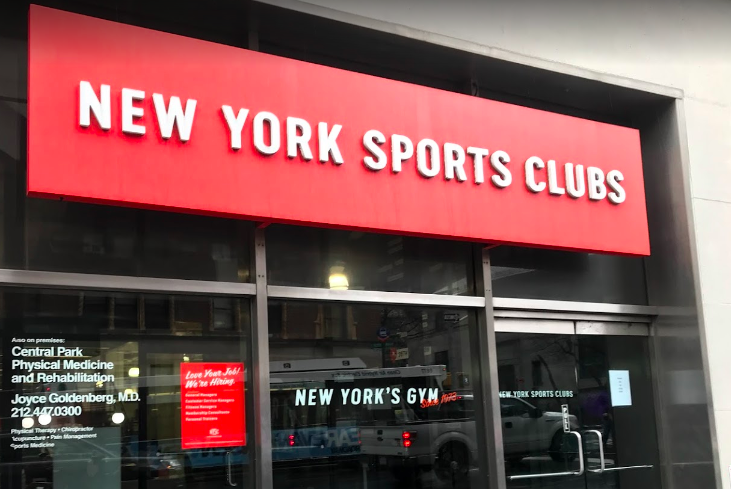
Town Sports, Which Continues to Charge Membership Fees While Clubs Are Closed, Gets Threatened by Multiple State AGs
 |
| Brands doing good? More like brands that treat people like crap |
In this space, I've been documenting the many cases of brands doing good during the pandemic — from Google donating ad space to small businesses to KFC and Chipotle passing out free food to healthcare workers. There seems to be no shortage of companies that have put lending a hand during the crisis ahead of financial gain.
And then there's Town Sports International.
Unlike fitness chains such as Equinox and Planet Fitness, Town Sports has continued to charge members of its gyms — including New York Sports Club and Boston Sports Club — monthly dues despite being shut because of coronavirus. The situation has understandably caused an uproar among members, who say their complaints to the club have fallen on deaf ears.
And now the attorneys general of three states and D.C. are getting involved.
New York Attorney General Letitia James said she considers the club's actions criminal and threatened its owners in a letter also signed by the AGs of Pennsylvania and D.C., where the company also operates. Meanwhile, Massachusetts AG Maura Healey said her office had received dozens of complaints and tweeted that Town Sports' actions were "completely unacceptable." She noted that perhaps members have had trouble getting responses from the clubs since they "fired all their employees." Ouch.
Town Sports — what you might call the Jack in the Box of health clubs — is notorious for its subpar facilities and service, and in particular for screwing over its members. Legion are the complaints online about how difficult the company makes it for members to close their accounts, even when there isn't a pandemic going on.
It's a situation that has been going on literally for decades, ever since the nearly half-a-century-old New York Sports, the first of the chain's outposts, started rapidly expanding in the 80s and 90s. How do I know? Because I was a member myself for many years and can attest to the company's general shittiness.
As anyone who's visited one of its locations can attest, Town Sports clearly doesn't put its profits back into its facilities. In a highly competitive industry where clubs like Equinox offer members bottled water and spa treatments, this club boasts locations that look like something out of the movie Saw, with broken exercise equipment, out-of-order showers and saunas, worn and molded shower curtains, and badly trained employees.
It's one thing for a company to put greed before its customers, inviting bad PR and the wrath of attorneys general in the process — quite another to fuck people over in the middle of a global catastrophe in which folks are literally dying. Especially if you're a company ostensibly in the health and wellness business.
Brands doing good? More like brands that make us sick.
Most Advertisers Are Making Adjustments to Creative Content Because of the Pandemic
 |
| Purdue Chicken chairman and pitchman Jim Perdue in an ad thanking those on the front lines of the food industry, including farmers, factory workers and truck drivers |
The large majority of advertisers have adjusted their creative since mid-March, when COVID-19 was declared a pandemic by the World Health Organization, according to a new survey by the Association of National Advertisers.
Of those surveyed, 90 percent of brands had made some kind of change in their advertising content, ranging from directly addressing the pandemic and its effect on communities to stressing more emotional versus straight sales messaging to backing off lifestyle imagery like large social gatherings.
Nearly half (46%) said their changes were substantial. Most advertisers surveyed (55%) noted that in-house teams had directed their adjustments. A sizable number (39%) suggested making changes to content was challenging, giving reasons that included closed-down studios and limited access to talent and crews because of the mass self-quarantining.
Earlier, Ad Age reported a survey from Advertiser Perceptions indicating that one-third of advertisers had canceled at least one campaign due to the pandemic. Eighty-one percent of those surveyed said they expected to cut ad budgets significantly this year, with 68% projecting less spending next year. While more than one-third reported cutting broadcast and cable TV budgets, nearly half said they were increasing their spending on Facebook and more than one-third upped the business they do with Google.
Ad Age is keeping a running list of how brands are responding to the pandemic. Numerous charitable efforts have been launched, ranging from Google donating free ad space to small and medium-sized businesses to eBay's accelerator program aimed at helping brick-and-mortar shops build their online sales operations to chains like KFC and Chipotle's donations of food to healthcare workers.
Among the brands that have addressed the health crisis in some way in their creative content are Perdue Chicken, which made an an featuring company chairman Jim Purdue thanking workers on the front lines; Little Caesars, which did a free-delivery tie-in with Conan O'Brien; and Taco Bell, which fashioned a campaign around user-generated drive-thru videos.
Such instances of brands doing good overshadows the bleak outlook for the ad business and those who rely on it. The recession — including the advertising recession (depression?) — is officially underway.
Thursday, April 2
Cannes Going Virtual? Festival Considers Options After Holding Companies Pull Out

With agency holding companies saying thanks but no thanks to the idea of moving the annual Cannes Lions International Festival of Creativity to October from its regularly scheduled June slot due to coronavirus, the show is currently looking at its options — one of which is doing the whole thing virtually — according to Ad Age.
WPP and Omnicom had already pulled out of the festival, while IPG, Publicis and Droga5 are said to be "assessing the situation." A trove of marketing and tech events, including SXSW in Austin, have been either canceled or rescheduled because of the pandemic. Google's Cloud Next and Microsoft's Build are a couple of meetings going virtual this year, while others — including Facebook's F8 developer conference — have been axed altogether.
But for agencies and their creatives vying for the industry's most coveted award, as well as the companies that do business with them and the press that cover it all, the absence of Cannes would be a weird situation indeed. We've all personally known creatives (that's creatives, as in plural) as well as agency CEOs whose entire identity would be in question without their precious Lions.
But the reality of a virtual Cannes and other conferences is starting not only to look more like a possibility but maybe even the norm — not just this year but moving forward. With all of us working from our kitchen tables during the self-quarantining and becoming more comfortable by the day with virtual meetings and technology like Zoom and Google Hangouts, might this crisis usher in a whole new routine of attending conventions in our jammies?
And then there's the not-insignificant issue of money. Long before the COVID-19 outbreak and subsequent pause of nonessential businesses, agencies and their parent companies were already balking at the multimillion-dollar annual investment that is Cannes, with Publicis going so far as to boycott in 2017, sending shockwaves through the agency world and serving as a gut punch to organizers of advertising's highest-profile event.
The upside of a virtual Cannes is obvious — not only would it save all those millions in travel costs but many more people would conceivably be able to attend, and without a passport. On the other hand, one of the major selling points of the festival has always been the opportunity for face-to-face interactions. As Michael Clinton, president, marketing and publishing director of Hearst Magazines, shared with me during an interview from the Croisette a few years back, Cannes is "the most efficient few days I spend throughout the year. I see agencies, I see clients, I see our joint venture partners, I see fellow media executives — and it's all sort of all concentrated within six blocks." Then there are the many impromptu moments, some of which prove lucrative. "Literally you'll run into someone on the street and end up creating the makings of a deal," Michael said.
Another important aspect of the event would also fall by the wayside: those splashy activations sponsored by tech giants and other companies that spend millions each year setting up princely outposts on the Mediterranean, renting yachts and throwing lavish, invitation-only soirées.
The festivity is perhaps the single biggest thing that would be lost in a virtual festival. After all, Google Beach sounds like a party — a virtual fireside chat with Mark Zuckerberg (or an in-person one, for that matter) does not.
UPDATE: Cannes is officially canceled this year. Read all about it here.
Wednesday, April 1
Who Said Corona Lost Its Crown? Beer Sales Soar Along With Cleaners, Soap — And Yes, Toilet Paper — While Beauty Products Fade

Turns out it's not so much "Corona is finished" as "Who finished all the Corona?"
You will recall that 5WPR survey from a couple of weeks ago, indicating that 38 percent of consumers said they would no longer buy the beer brand because of a negative association with the coronavirus pandemic? Well, Ad Age got its hands on the latest Nielsen data, revealing that Corona sales are actually up by 50%. "Apparently, Corona Beer is proving popular at Zoom happy hours," the website reports.
Spurred by the panic buying of the last few weeks, Nielsen also pointed to massive sales increases for Kimberly-Clark, home of Scott, Cottonelle, Viva and Kleenex paper products (up 160%); Reckitt Benckiser, whose brands include Lysol and Mucinex (148%); Clorox (125%); Procter & Gamble, makers of Charmin, Bounty and Pampers (109%); and Colgate-Palmolive, parent of Colgate and Tom's of Maine toothpaste, Softsoap and Murphy's Oil Soap (90%).
The CEO of Corona parent Constellation Brands had been saying all along that, despite what polls might suggest, business was actually brisk. Even in a time when media coverage has been particularly alarmist, the Corona Beer stories have been especially over the top. "'Corona Beer Virus'? The Global Epidemic [sic] Is Taking a Real-Life Toll on the Beverage" went Time's bleak headline. It also didn't help when a congressman, alleging that the pandemic was being blown out of proportion by the media, dubbed it "the beer virus."
But while beer and toilet paper are doing just fine, thank you, other categories aren't so lucky.
With everyone sheltering in place, working from home and just generally acting as hermits and big, fat slugs right now, perhaps it's no surprise that looking our best is not exactly a top priority (with the exception of those of you who won't quit posting videos of yourselves on your Instagram Stories). According to Nielsen, business at L'Oréal, parent of Maybelline, Lancome and Kiehl's, is off by 10%, while at Coty, the beauty and fragrance empire that is home to CoverGirl and brands like Calvin Klein, Gucci and Philosophy, sales have plummeted 17%.
And if you were wondering what that faintly familiar aroma was wafting through your house these days? That's right, France.
Subscribe to:
Posts (Atom)
How Agencies Are Remaking the Retail Media Market
"As agencies have moved more aggressively into the domain of commerce media, one has to wonder about the role of Amazon — specifically,...

-
 The old Land O'Lakes label, featuring the Native American character Mia The label of Land O'Lakes dairy products featuring the ...
 -
 It's official: that gleaming monument to hubris known as Hudson Yards—the mega-development on the West Side that made Tenth Avenue unnav...
 -
 NPR finally said enough is enough and did what we all want but don't have the balls to: quit Twitter. As Poynter reports , NPR, which h...